Water mitigation · Bellevue, WA
Water Mitigation Bellevue
Fast response, professional drying, and clear documentation to reduce damage after a leak, overflow, or stormwater intrusion.
Water extraction
Moisture mapping
Controlled drying
Written documentation
Immediate damage control
Stop Water Damage From Spreading
When water gets into flooring, drywall, or insulation, the damage grows by the hour. Water mitigation in Bellevue is the work that limits that spread: stopping the source when possible, removing standing water, setting proper drying equipment, monitoring moisture, and documenting the conditions.
Fire Damage Restoration Bellevue handles water mitigation for homes, condos, and commercial spaces across Bellevue, including situations where moisture migrates between rooms or into shared walls. We are a professional fire damage restoration company in Bellevue focused on stabilizing the property quickly, protecting what can be saved, and giving you a written plan before any major repairs begin.
If you are dealing with a sudden leak or a slow seep that finally showed up as staining, the right move is the same: get a qualified team on site to confirm where the water traveled and start controlled drying before materials swell, delaminate, or grow microbial contamination.
Water extraction and removal
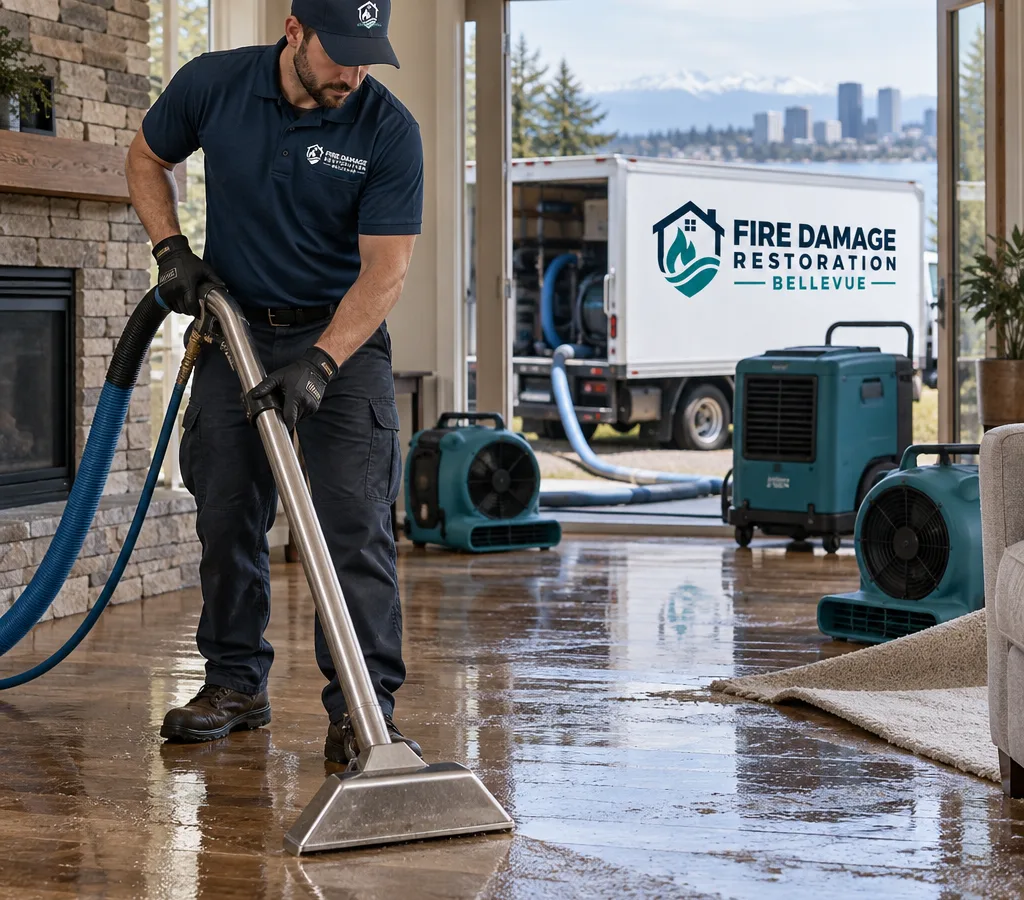
Rapid removal of standing water using professional extraction tools, plus removal of saturated porous materials when they cannot be dried safely.
Structural drying with monitoring
Air movers and dehumidifiers are sized to the room volume and wet materials. Moisture readings guide equipment placement and daily adjustments.
Targeted demolition when needed
Controlled removal of baseboards, affected drywall, or wet insulation to open cavities for drying, while keeping demolition as small as possible.
Cleaning and odor control
Cleaning steps depend on what the water contacted. We can HEPA-filter the air and use appropriate cleaners for affected surfaces and contents.
Documentation for next steps
Photos, moisture logs, and a clear scope help support insurance conversations and keep repairs organized once the space is dry.
Local building conditions
Bellevue-Specific Water Problems We See
Water problems in Bellevue often start in predictable places, but the damage pattern is rarely obvious from the surface. In condos and townhomes near Downtown Bellevue, shared walls and stacked plumbing can let moisture move into neighboring units or between floors, so quick containment and moisture mapping matters.
In areas with lots of landscaped slopes and retaining walls, such as parts of Somerset, water can show up as seepage at lower levels or along foundation walls during heavy rain. In older neighborhoods like West Bellevue, failures may come from aging supply lines, older shutoff valves, or hidden leaks that have been feeding moisture into subfloors for weeks.
We approach every loss the same way: identify the category of water (clean, gray, or contaminated), verify where it traveled using meters and inspection openings when justified, and choose drying methods that match the materials in place. A floating floor, for example, behaves differently than nail-down hardwood, and each calls for a different mitigation plan.
From source control to dry-out
Our Water Mitigation Process in Bellevue
-
01
Safety check and source control
We confirm the area is safe to enter, look for electrical and slip hazards, and identify the likely source so it can be stopped or isolated.
-
02
Moisture mapping and scope
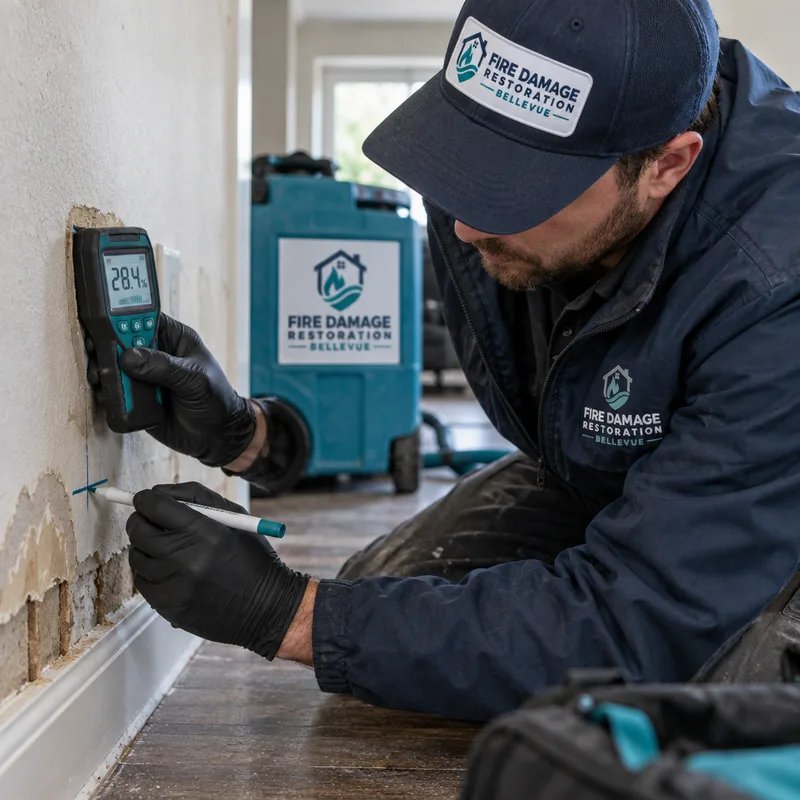
We measure moisture in floors, walls, and cabinetry and document affected materials. This is where hidden migration is found and the scope gets defined.
-
03
Extraction and selective removal
Standing water is extracted first. If materials are too saturated or trapped to dry, we remove them in a controlled way to open the assembly.
-
04
Drying setup and containment
We set air movers, dehumidifiers, and containment as needed to keep air clean and drying focused. Equipment placement is adjusted to the floor plan, not a one-size layout.
-
05
Monitoring, documentation, and dry-out completion
We track readings until materials reach acceptable moisture levels for the environment, then provide a clear summary for repair planning and insurance files.
Planning the mitigation scope
How Much Does Water Mitigation Cost in Bellevue?
Water mitigation in Bellevue typically ranges from about $900 to $3,500 for a small, contained loss, while larger losses that need significant demolition, multiple days of equipment, or contaminated-water handling often run $4,000 to $12,000+.
Your final cost depends on how far water traveled, the type of water (clean vs. gray/contaminated), how many rooms and cavities must be dried, the flooring type, access (crawlspaces, tight condos), and how long drying takes. Exact pricing is confirmed after an on-site inspection and moisture mapping.
If you are unsure whether the water is still spreading behind walls or under floors, a quick inspection and moisture map can prevent a small issue from turning into a full rebuild.
Call for Emergency HelpHomeowner perspective
“A supply line leak soaked our kitchen and the room below. They found moisture we never would have suspected, set up drying the same day, and kept us updated with readings and photos.”
“We're in a condo and were worried about the unit next door. The team explained what they were checking, used containment, and documented everything so our HOA and insurer had what they needed.”
Practical answers
Water Mitigation Bellevue: Common Questions
How fast should water mitigation start after a leak?
Water mitigation should start as soon as you can safely get access, ideally the same day, because moisture wicks into drywall, baseboards, and subfloors quickly. Early extraction and controlled drying often reduces the amount of material that has to be removed and shortens the overall disruption.
Do you have to remove drywall and baseboards for water mitigation?
Not always, but it is common when water has entered wall cavities or insulation. In Bellevue homes with finished basements or dense interior layouts, opening small inspection points and removing baseboards can be the difference between drying a cavity properly and trapping moisture behind finished surfaces.
How long does the drying process usually take?
Most dry-outs take about 3 to 5 days, but the timeline depends on materials and how long the water sat before mitigation started. Dense materials, multiple layers (like tile over underlayment), or water trapped under cabinets can extend drying, which is why moisture readings drive the schedule rather than the calendar.
Will my floors need to be replaced after water mitigation?
Sometimes, but not automatically. Floating laminate and some engineered floors can swell at seams, while certain hardwood assemblies may be candidates for drying and reconditioning if caught early. The decision is made after evaluating the floor type, cupping, delamination risk, and moisture levels in the subfloor.
Can you work with my insurance adjuster?
Yes. We provide the documentation most adjusters request for a water loss, including photos, moisture logs, and a clear scope of mitigation work. Coverage and approvals are set by your policy and carrier, but good documentation makes the process easier to navigate.
What should I do while waiting for the team to arrive?
If it is safe, stop the water source, avoid using electrical outlets in wet areas, and move small valuables and rugs away from the wet zone. Do not run heat high or place household fans randomly on the wet area if you suspect contaminated water or hidden moisture, since uncontrolled airflow can spread odors or particles; a measured setup is safer and more effective.
Need water mitigation in Bellevue now?
Tell us what happened and what areas are affected. We will confirm next steps, explain what drying will look like in your space, and provide a written scope you can use for repairs and insurance.