
Mold testing · Bellevue, WA
Mold Testing Bellevue WA
Get a careful inspection, defensible sampling, and clear lab-backed results so you can decide what to do next with confidence.
Visual assessment
Targeted sampling
Lab-backed results
Written documentation
Inspection and documentation
Clear answers when you suspect mold
If you are searching for mold testing Bellevue WA, you likely want two things: confirmation and documentation. Mold can look like dirt, soot, or simple staining, and odors can come from wet building materials even when growth is hidden. Testing helps separate suspicion from proof.
Our team at Fire Damage Restoration Bellevue provides mold testing for Bellevue homeowners, property managers, and businesses. As fire damage restoration specialists serving Bellevue, we are used to documenting conditions clearly and working in occupied homes and active commercial spaces.
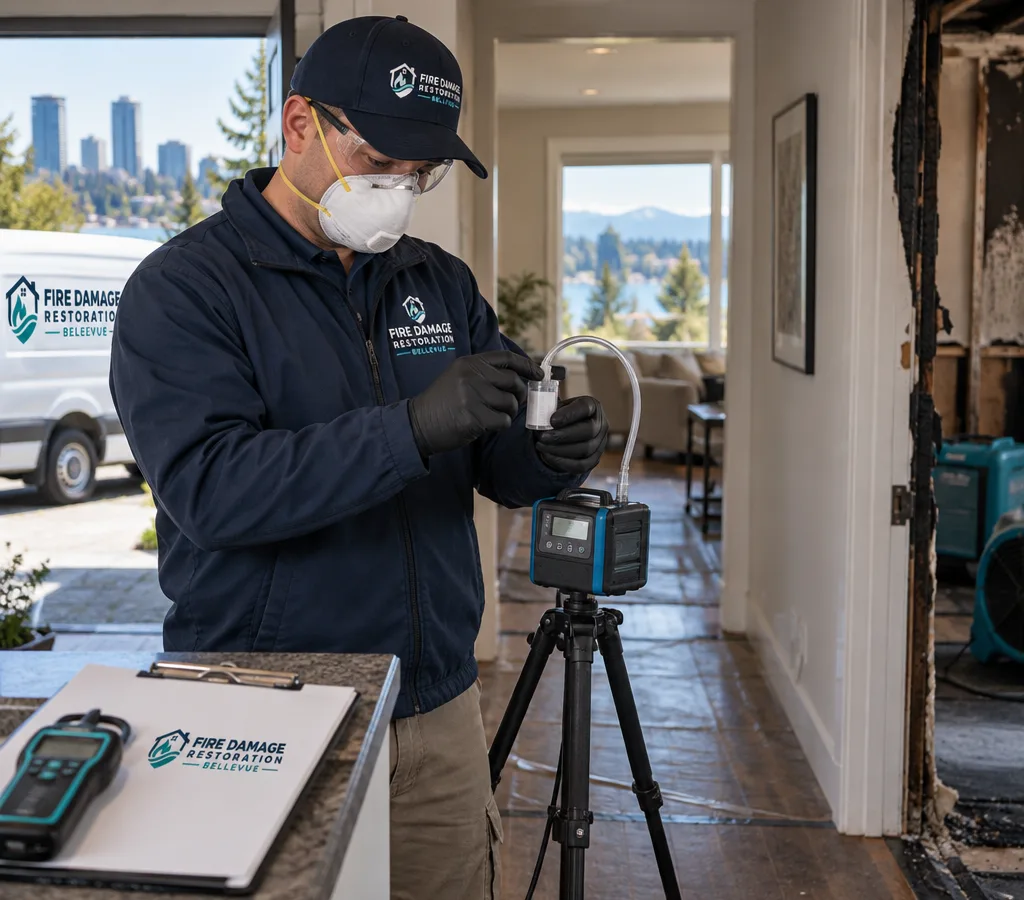
What you receive is straightforward: a careful visual assessment, targeted sampling based on building science—not random swabs—and a written report that ties results to what we observed on site. If cleanup is needed, you will have the paperwork to support next steps with a remediation contractor, your restoration team, or your property file.
Targeted investigation
How mold testing works (and what it can and cannot tell you)
Mold testing is most useful when it answers a specific question. The inspection clarifies the story of the building: where moisture may be entering, what materials are staying damp, and whether suspected areas justify sampling.
Common sampling methods include:
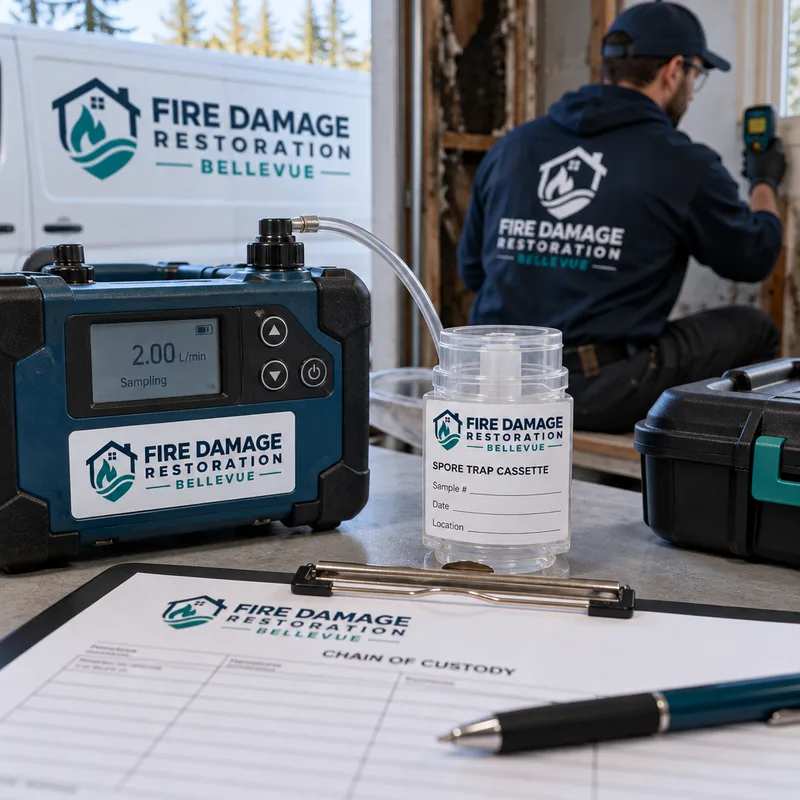
Air sampling: compares indoor spore types and levels to an outdoor control sample. This is often the best way to understand whether a space has an indoor amplification issue.
Surface sampling: confirms whether a visible spot is mold and can help identify the type present.
Bulk sampling: is used when a building material itself is suspect and needs lab confirmation.
Testing has limits. A lab report does not replace finding the moisture source. Mold growth follows water, so we pair sampling with moisture readings and a practical assessment of likely pathways, such as roof or window leaks, plumbing failures, or damp crawlspace conditions that can affect indoor air.
In Bellevue, many homes and offices rely on tight building envelopes and mechanical ventilation. That is useful for energy efficiency, but it can make humidity and moisture events show up as odor or condensation issues. Targeted testing—not blanket sampling—is especially important.
Clear, useful findings
What you can expect from our mold testing in Bellevue
Request Emergency ServiceInspection-first approach
We start with a visual assessment and moisture checks so sampling is based on conditions, not guesswork.
Right samples for the question
Air, surface, and, when needed, bulk samples are selected to confirm or rule out a suspected source or area.
Lab-backed results
Samples go to a qualified lab for analysis so you have documented findings that stand up in property records.
Plain-English reporting
We explain what was sampled, where, and why, then summarize what the results mean for next steps.
Respect for occupied spaces
We work cleanly and efficiently in living areas, offices, and common spaces with minimal disruption.
Guidance after results
If results point to cleanup, we outline practical options and what a proper remediation plan typically includes.
From concern to report
Our mold testing process in Bellevue, WA
-
01
Quick intake and goals
We start by clarifying what prompted the concern: a musty odor, visible spotting, a recent leak, tenant complaint, or a pre-purchase due diligence request.
-
02
On-site inspection and moisture checks
We inspect the areas of concern and take moisture readings on materials where it makes sense. The goal is to identify likely damp zones that correlate with odor or staining.
-
03
Sampling plan and collection
We collect an outdoor control sample when using air testing, then take indoor samples where conditions and airflow support a meaningful comparison. Surface samples are taken only where they answer a clear question.
-
04
Lab analysis and documentation
Samples are labeled, documented, and sent for analysis. You receive results tied back to locations and observations from the inspection.
-
05
Report review and next-step options
We walk you through what the findings mean, what to address first, and what a proper remediation scope would generally include: containment, source control, cleaning, and verification.
Planning your inspection
How Much Does Mold Testing Cost in Bellevue?
Mold testing in Bellevue typically runs about $350 to $950 for a standard inspection with 1 to 3 samples, while larger homes, multi-unit properties, or investigations that require more sampling often land around $950 to $1,800+. Surface-only confirmation for one small area is often at the lower end, while air testing with an outdoor control sample and multiple indoor locations costs more.
Your final price depends on the number of samples, the size and layout of the building, access to suspected areas such as attics and crawlspaces, and whether you need expedited scheduling or more detailed reporting. Exact pricing is confirmed after the on-site inspection and sampling plan are set.
Bellevue building conditions
Where mold shows up in Bellevue buildings
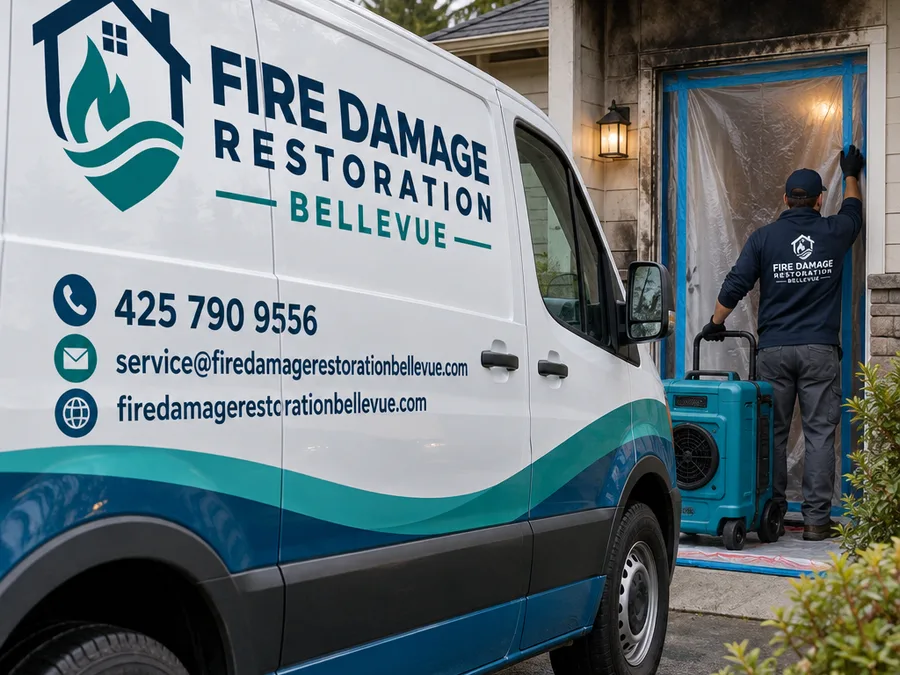
Mold needs moisture and a food source, and building materials provide plenty of that once they stay damp. In Bellevue, concerns often come after a leak, recurring condensation, or a damp crawlspace that affects indoor air.
We frequently investigate:
- Bathrooms and laundry areas where repeated humidity can wet drywall and baseboards
- Kitchens where sink leaks can affect cabinets and subflooring
- Window perimeters where water intrusion or condensation can damp framing
- Crawlspaces where standing water, wet soil vapor, or plumbing issues can keep wood moisture elevated
- Commercial suites where an HVAC issue or roof leak affects ceiling tiles and wall cavities
Neighborhood and building type can change access and likely problem areas. Condo units in Downtown Bellevue and near Bellevue Square often require coordination for shared walls and common mechanical systems, while single-family homes in areas like Somerset or Newport Hills can have more attic and crawlspace access considerations. In Bridle Trails, tree cover and shaded exteriors sometimes mean slower drying after a leak, which makes fast documentation useful.
If you also need help planning the work after results come back, many clients pair testing with water damage restoration in Bellevue when the underlying moisture problem is active or recent.
Homeowner and property perspective
“We had a persistent musty smell after a small leak. The inspection explained where moisture was likely trapped, the samples were taken thoughtfully, and the report made it easy to decide what needed to be opened up and cleaned.”
“Property management needed documentation for a tenant complaint. The testing was handled professionally, and the write-up was clear enough to share with our maintenance vendor and keep on file.”
Practical answers
Mold testing Bellevue: common questions
How fast can you schedule mold testing in Bellevue, WA?
Scheduling depends on current demand, but many inspections can be arranged quickly for active concerns like odors after a leak or visible growth. If you have a real-time moisture issue, tell us what happened and what areas are affected so we can plan the right sampling approach and minimize delays.
Do I need mold testing if I can already see mold?
If you have clear, visible growth, testing is most useful when you need documentation, when the affected area is large or recurring, or when you need to confirm what is on a surface before planning a scope. In many cases, the bigger priority is identifying and correcting the moisture source so the problem does not return.
What is the difference between air sampling and swab testing?
Air sampling helps evaluate whether the indoor environment shows signs of an indoor mold source by comparing indoor samples to an outdoor control, while swab or tape testing confirms whether a specific spot on a surface is mold. Air sampling is usually better for odor complaints or hidden concerns; swabs are better for confirming a suspicious stain.
Will mold testing tell me exactly where the mold is coming from?
Testing can strongly suggest an indoor source and help narrow the likely area, but it does not always pinpoint the exact cavity or material without additional investigation. The most reliable approach is combining inspection observations, moisture readings, and targeted sampling, then recommending focused openings only when justified.
Can you test a crawlspace or attic in Bellevue homes?
Yes, crawlspaces and attics are common areas to inspect and sample when conditions warrant it, especially after plumbing leaks, roof issues, or long-term humidity concerns. Access and safety matter, so we confirm entry conditions and plan sampling locations that will produce meaningful lab results.
Do you provide a written report I can share with a landlord, buyer, or insurance adjuster?
Yes. You receive written documentation that includes the inspection context, sampling locations, and lab results with a clear summary of what the findings mean. If you are also documenting a related loss event, a fire damage restoration company in Bellevue can help coordinate documentation and next steps when conditions overlap with restoration needs.
Should I run air purifiers or clean before the inspection?
For the most representative results, avoid heavy cleaning, painting, or using strong disinfectants right before sampling, and let us know if air scrubbers or purifiers have been running. Normal day-to-day living is fine; we just want to understand anything that could temporarily change airborne particle levels.
Need mold testing in Bellevue?
Describe what you are seeing or smelling, what areas are affected, and whether there was a recent leak. We will recommend an inspection and sampling plan that fits the situation and provide clear lab-backed results you can act on.