Mold Testing
Certified inspection and sampling to confirm whether mold is present, where it is coming from, and what conditions are feeding it. Clear reporting helps you decide next steps with confidence.
Serving Bellevue, Washington & surrounding areas
24/7 Emergency Response
Bellevue fire restoration
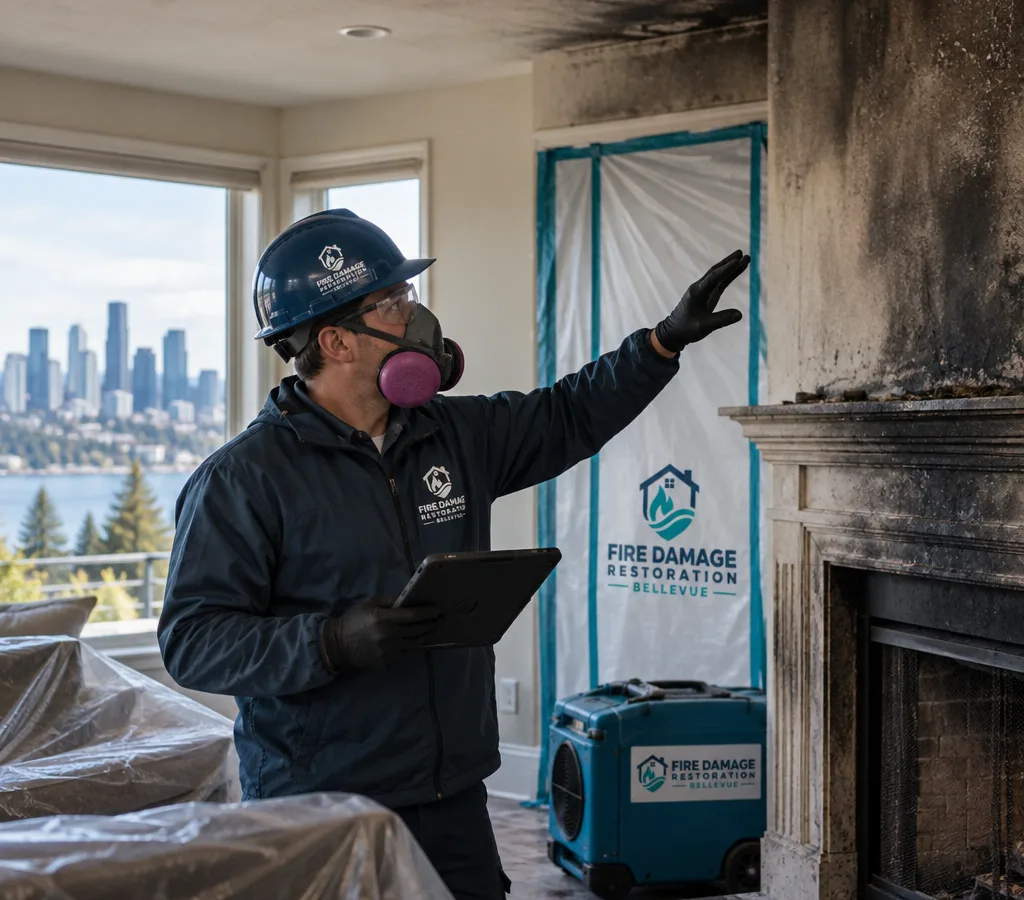
Fast, careful cleanup after a fire, with smoke odor removal, soot cleanup, and rebuilding support to get your home or business back to normal.
Fire, smoke, and water assessment
Containment of affected areas
Soot and smoke cleanup
Written restoration scope
Controlled recovery
When a fire is out, the damage usually is not. Soot and smoke residue keep spreading into HVAC returns, porous drywall, insulation, and fabrics. Water used to put the fire out can also soak framing, floors, and cabinets, creating a second round of damage that starts the same day.
Fire Damage Restoration Bellevue provides fire damage restoration in Bellevue for homes and small commercial spaces, focused on stabilizing the property first, then cleaning and restoring it in a controlled, documented way. Typical work includes emergency board-up where needed, debris removal, soot and smoke cleanup, odor control, and coordinating the rebuild steps once the space is ready.
You will get a clear scope of work, practical options for what can be cleaned versus replaced, and a plan that keeps unrelated areas protected while restoration is underway.
Related restoration services
Certified inspection and sampling to confirm whether mold is present, where it is coming from, and what conditions are feeding it. Clear reporting helps you decide next steps with confidence.
Containment, controlled removal, cleaning, and drying to address active mold growth and reduce the chance of it returning. Work is planned to protect unaffected areas during cleanup.
Targeted removal of mold-damaged materials and detailed cleaning of impacted surfaces, followed by moisture correction recommendations so the problem does not repeat.
Rapid water extraction, structural drying, and monitoring to reduce swelling, warping, and secondary damage after leaks, floods, or firefighting water.
A controlled scope
We start by securing unsafe openings, isolating damaged zones, and addressing wet materials that can keep deteriorating. That early control helps prevent soot migration, cross-contamination, and avoidable tear-out later.
Different materials need different methods. We choose dry cleaning, wet cleaning, or specialized product approaches based on whether the surface is sealed, porous, heat-damaged, or sensitive to abrasion.
Smoke odor usually lives in residues, not the air. We focus on cleaning and removing affected materials first, then use deodorization steps appropriate to the space so odor does not rebound after you move back in.
Fire cleanup can release fine particles. We use containment barriers and HEPA filtration practices to keep dust and soot from spreading into clean rooms, closets, and HVAC pathways during restoration work.
You receive a written scope and clear notes on what is salvageable versus what is better replaced. That helps align the homeowner, property manager, and rebuild trades on the same plan and timeline.
On-site problem solving
Fire Damage Restoration Bellevue provides fire damage restoration services in Bellevue, WA.
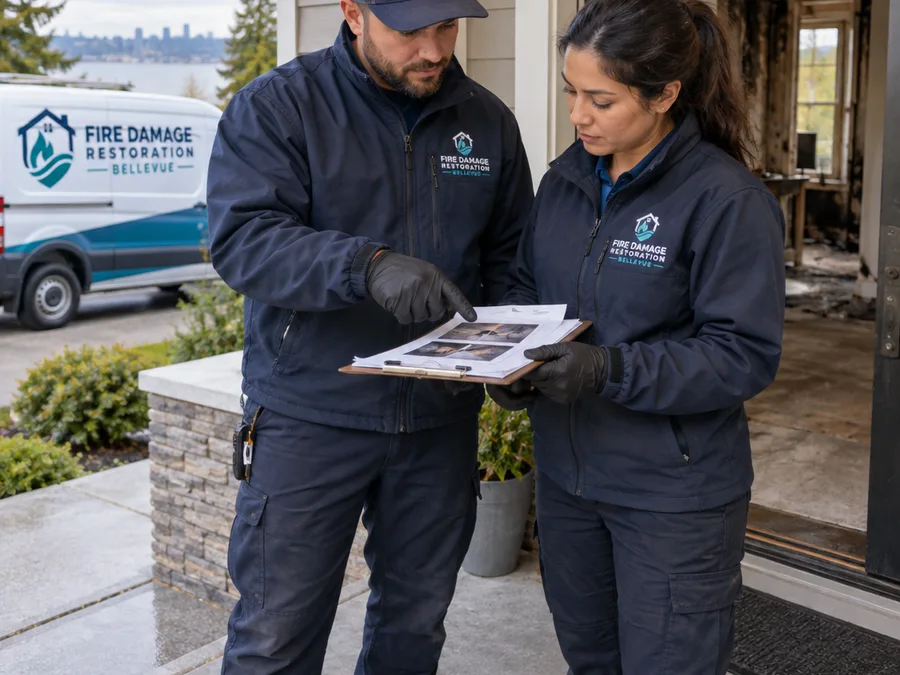
Our team focuses on practical, on-site problem solving after fires: assess the extent of soot, smoke, and water impact, protect the rest of the property, and move the job forward in logical phases. We work in occupied homes, vacant properties, and commercial spaces where downtime matters, and we adjust the approach to the materials in front of us, whether that is drywall and insulation, hardwood floors, cabinets, or specialty finishes.
If you are unsure what should be cleaned versus removed, or you are worried that the smell will never go away, we will walk you through the options and the tradeoffs before any work starts.
Planning the scope
Fire damage restoration in Bellevue typically ranges from about $3,000 to $25,000+, depending on how much of the structure and contents were affected. Light smoke cleanup in a few rooms often lands around $3,000 to $8,000, while heavier soot contamination, demolition, and multi-room deodorization can run $10,000 to $25,000+.
Final pricing changes with the size of the affected area, what materials must be removed, how far smoke traveled through HVAC or attics, the amount of water damage, and access for equipment. The exact cost is confirmed after an on-site inspection and a written scope.
From assessment to rebuild
We assess fire, smoke, and water impact, identify safety issues, and set the initial plan. If needed, we secure openings and isolate affected areas to control residue movement.
We remove unsalvageable contents and building materials, then prepare surfaces for detailed cleaning. This step often includes controlled demolition where smoke and soot have penetrated porous materials.
We clean ceilings, walls, framing, and contents where appropriate, using methods suited to the material. We also address HVAC pathways when smoke has circulated through the system.
After source cleaning, we apply odor control steps appropriate for the space and confirm that residues are addressed. The goal is a space that is ready for repairs and normal use.
Once cleaning is complete, we support the transition into repairs by providing clear documentation and helping coordinate sequencing so finishes go in after the space is properly prepared.
If you need fire restoration in Bellevue WA, start with a site visit and a written scope so you know what can be saved, what must be replaced, and what happens next.
Call for Emergency HelpBellevue neighborhoods
We work across Bellevue, with plans tailored to the building style and how smoke and soot typically travel in each type of property.
High-rise condos and mixed-use buildings often require careful containment, freight-elevator coordination, and extra attention to shared corridors so residues and odors stay controlled.
Larger homes and custom finishes can be sensitive to abrasive cleaning, so we focus on material-specific methods and detailed documentation for what is cleaned versus replaced.
A mix of older and updated homes means smoke impact can vary room to room, and attic or crawlspace pathways often need inspection when odors persist.
Many mid-century houses have interconnected layouts where smoke can spread quickly, so HVAC returns, closets, and soft goods need thorough evaluation early.
Split-level and hillside properties can have multiple levels and storage areas that trap odor, so we plan deodorization around airflow and isolated zones.
Dense residential areas and nearby retail spaces often need fast stabilization and clear work zones to keep daily routines and access points manageable during restoration.
“They explained what needed to be removed versus cleaned, and the plan made sense. The soot was gone, the smell finally cleared, and we could start repairs without guessing.”
“Communication was steady the whole time. Containment kept the rest of the house livable, and the cleanup work was detailed, especially around vents and trim.”
“After the fire we were overwhelmed. They broke the job into steps, documented everything, and kept the worksite safe and organized until it was ready to rebuild.”
Practical answers
In many cases, work can begin quickly once the property is safe to enter and access is approved. Early steps usually focus on stabilizing openings, controlling soot spread, and addressing any standing water or wet materials.
Fire restoration typically includes assessment, debris removal, soot and smoke residue cleaning, odor control, and preparation for repairs. The exact scope depends on where smoke traveled, what materials were affected, and whether firefighting water caused secondary damage.
Yes, smoke odor can often be removed even when the fire was small, but it requires source cleaning first. We inspect porous materials, HVAC pathways, and contents that absorb residue, then apply deodorization appropriate to the space.
Sometimes you can stay in the home if affected areas can be fully contained and utilities are safe, but it depends on the extent of soot, odor, and demolition. We will explain what is realistic after the inspection and how work zones will be separated.
Containment and filtration are key. We isolate affected areas, manage airflow with HEPA filtration practices, and follow controlled cleaning and debris-handling steps so residues are not tracked through hallways, stairs, and closets.
Secure the site, avoid disturbing soot-covered surfaces, and limit HVAC use until the system is evaluated. If it is safe to enter, take photos for documentation and remove essential items, then schedule an inspection to prevent residue and moisture damage from getting worse.
Tell us what happened and what areas were affected. We will schedule an on-site inspection, outline the scope, and help you move from cleanup to repairs with a clear plan.