
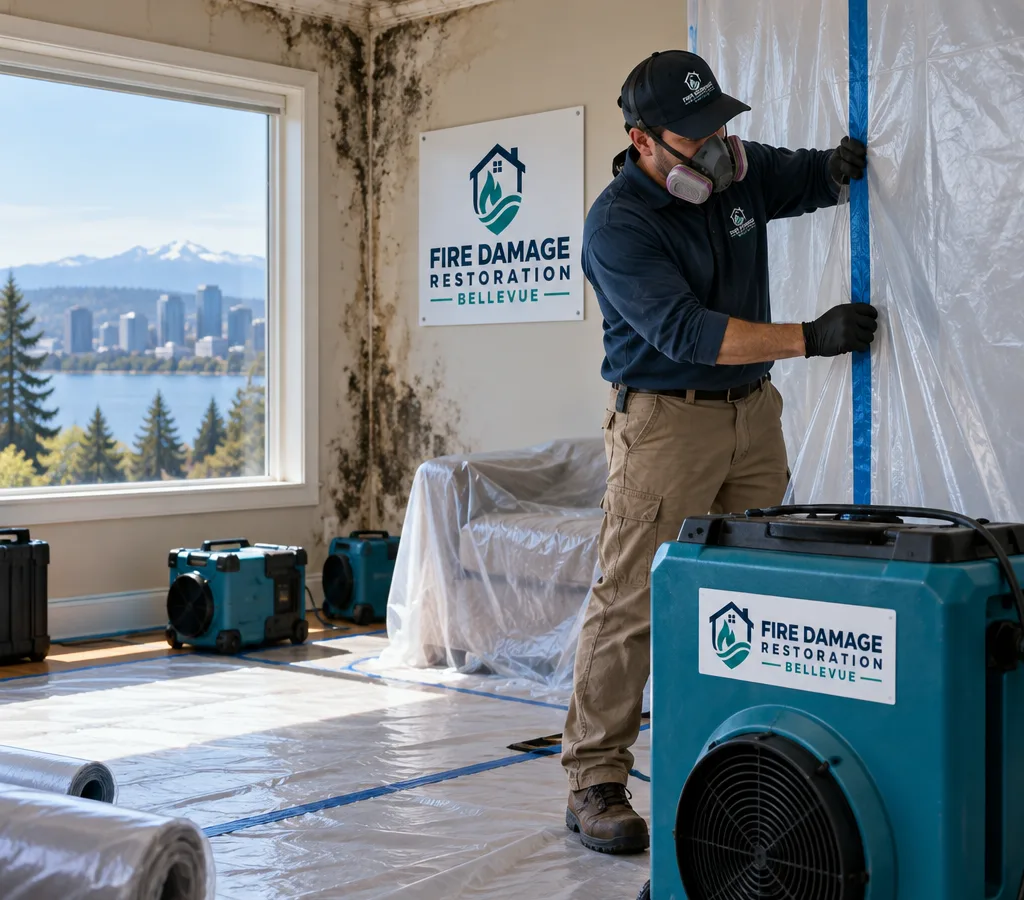
Mold removal · Bellevue, WA
Mold Removal Bellevue
If you smell a musty odor, see staining, or have had a leak, you need a plan that stops spread, removes contaminated materials safely, and documents the work. We inspect, contain, clean, and restore with clear scopes and straightforward pricing.
Inspection-first scope
Controlled containment
Moisture verification
Written documentation
Controlled cleanup and restoration
Safe mold remediation with containment and a written scope
Mold problems usually start the same way in Bellevue: a slow plumbing leak, a bathroom exhaust that cannot keep up, a wet crawl space, or water intrusion that was cleaned up on the surface but never dried inside the wall. Mold removal is not a single spray or wipe. Done correctly, it is a controlled remediation process: isolate the work area, remove or clean affected materials using the right methods, and verify the space is dry so the growth does not return.
Fire Damage Restoration Bellevue handles mold removal Bellevue projects with an inspection-first approach. We explain what we found, what needs to be removed versus cleaned, how we will prevent cross-contamination, and what the restoration steps look like after remediation. Our team also helps gather the photos, moisture readings, and work notes that insurers commonly ask for.
You are working with an experienced fire damage restoration team in Bellevue that also performs mold remediation, so you get practical jobsite management: protective setup, disciplined drying targets, and a clear handoff from cleanup to repairs.
Moisture mapping and assessment
What we look for during a Bellevue mold inspection
A good mold plan starts by finding the moisture source and mapping the affected area. During an on-site assessment we focus on:
Moisture entry points: plumbing penetrations, under-sink cabinets, toilet supply lines, dishwashers, windows, and roof or flashing leaks.
Hidden growth: behind baseboards, in drywall paper, under flooring, inside vanity toe-kicks, and around HVAC returns.
Humidity and ventilation: bathrooms without adequate exhaust, laundry areas, and tight closets on exterior walls.
Crawl spaces and attics: common places for elevated humidity in the Puget Sound region, especially after rain or when ventilation is restricted.
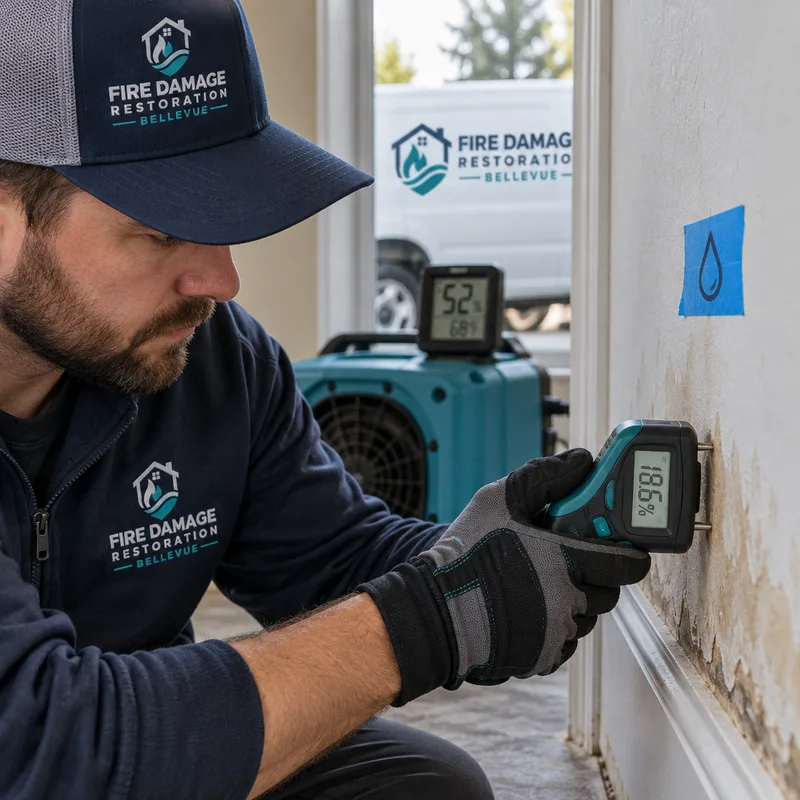
Bellevue has a wide mix of building types, from older homes with aging plumbing to newer, tightly sealed construction where humidity control matters. We use moisture meters to track wet materials and determine how far work needs to extend, then we put the scope in writing so you can make a clear decision before any removal starts.
Containment and negative air
We isolate the work zone with poly sheeting and maintain controlled airflow so spores and dust stay in the contained area instead of spreading through the home.
Source control
If the leak or humidity issue is not addressed, mold comes back. We identify the moisture driver and explain what must change to keep materials dry.
Removal of unsalvageable materials
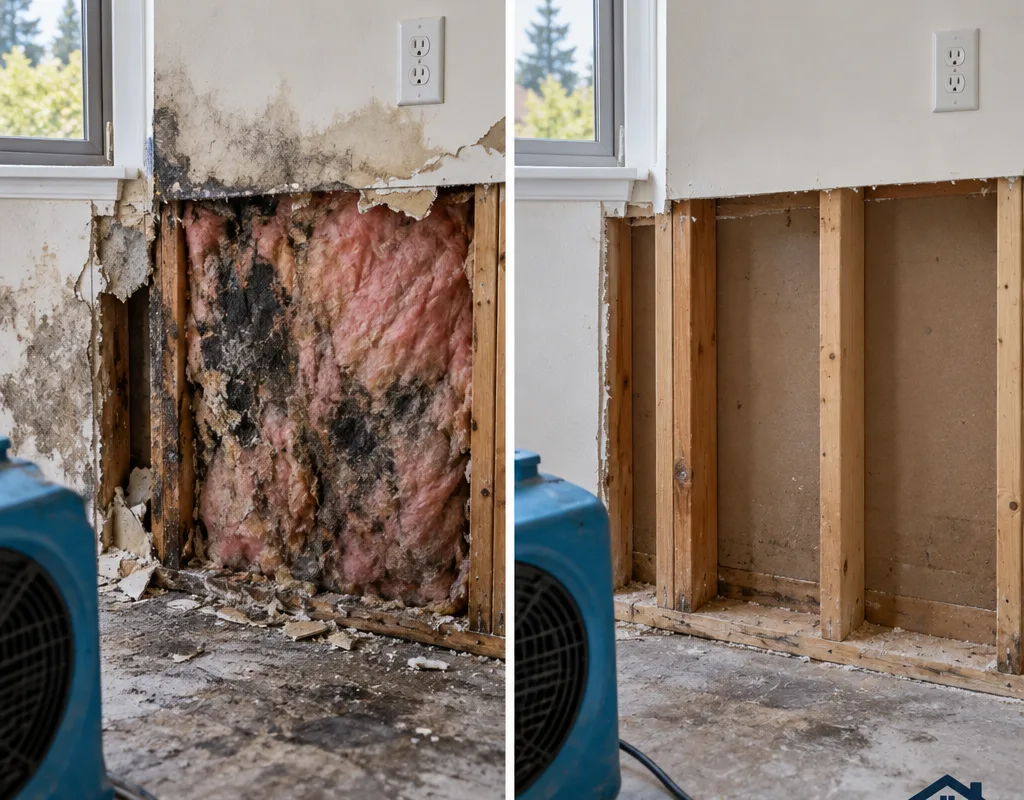
Porous materials that cannot be reliably cleaned—often drywall, insulation, or particle board—are removed, bagged, and handled carefully to limit contamination.
Cleaning for remaining structure
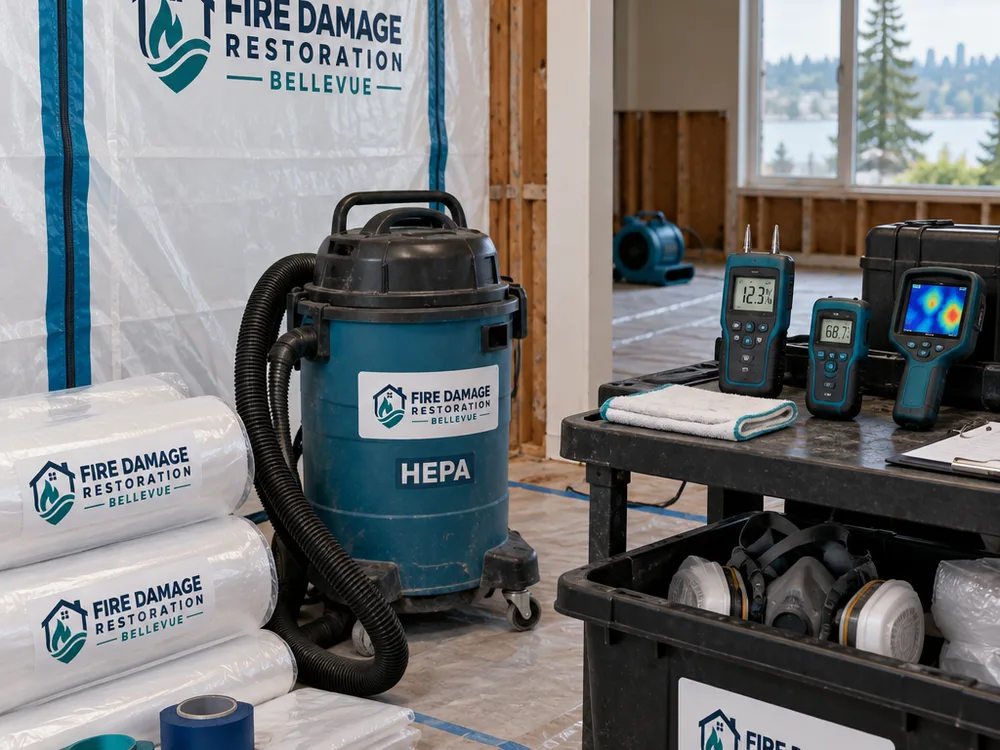
For framing and other salvageable surfaces, we use HEPA vacuuming and appropriate antimicrobial cleaning methods based on the material and extent of growth.
Drying and monitoring
Remediation is incomplete until moisture is back to safe levels. We monitor drying progress and adjust equipment placement so the space stabilizes.
Restoration planning
After remediation, we outline what it takes to put the area back together, including what can be reused and what should be replaced.
From inspection to restoration
Our mold removal process in Bellevue
-
01
Inspection and scope
We assess visible and suspected areas, take moisture readings, and define where containment will be built. You receive a written scope that separates remediation from any rebuild work.
-
02
Set up containment
We protect adjacent areas, establish barriers, and set up HEPA filtration and negative air as needed. This is what keeps mold debris from becoming a whole-house issue.
-
03
Remove and clean affected materials
We remove unsalvageable porous materials and clean remaining framing and surfaces with HEPA methods and appropriate cleaning agents. If odor is a concern, we address odor sources as part of the cleanup plan.
-
04
Dry and verify moisture conditions
We dry the area and verify conditions are back to acceptable moisture levels for rebuilding. If we find a secondary wet area during demolition, we stop and update the scope before proceeding.
-
05
Detailed documentation and next steps
You get photos and notes that support insurance documentation when applicable. We also provide clear next steps for restoration so the space can be safely returned to use.
Planning your remediation
How Much Does Mold Removal Cost in Bellevue?
Mold removal in Bellevue typically ranges from about $1,200 to $6,500 for many residential projects, with small, contained areas toward the low end and multi-room or crawl space work on the high end. Limited surface cleaning might land around $1,200 to $2,500, while removal of drywall or insulation with containment and drying often runs $2,500 to $6,500+.
Final cost depends on the size of the affected area, how much demolition is needed, access—attic or crawl space versus an open room—moisture source repairs, and how long drying and monitoring take. The exact price is confirmed after an on-site inspection and a written scope.
Containment, cleanup and drying
Examples of controlled mold remediation work

Homeowner perspective
“We had mold after a slow leak under the kitchen sink. They set up plastic containment, explained what had to be removed, and kept the rest of the house clean. The documentation made the insurance conversation easier, and the smell was gone once everything dried out.”
“What I appreciated most was the written scope. There was no confusion about what was remediation versus what was repair, and they updated us right away when they found wet drywall beyond the first area.”
Practical answers
Mold removal Bellevue: questions homeowners ask before scheduling
How fast can you start mold removal in Bellevue?
Most mold jobs can start quickly once an inspection confirms the scope, because containment and controlled removal are time-sensitive when materials are wet or actively deteriorating. If the area is still damp from a leak, we prioritize stabilizing moisture conditions first, then move into remediation with containment so the problem does not spread.
Do you test for mold, or do you only do remediation?
We can perform a practical inspection focused on moisture and visible conditions, then recommend remediation steps based on what we find. If you want laboratory confirmation or a third-party protocol, which is common for real estate transactions, you can use an independent mold inspector and we will follow the remediation plan they provide.
Can you remove mold without tearing out drywall?
Sometimes, but only when the affected material can be reliably cleaned and dried. If mold is on the paper face of drywall, inside insulation, or in swollen composite wood, removal is often the safer option because those porous materials are difficult to clean fully and can keep feeding regrowth if they stay damp.
Is mold removal covered by insurance in Washington?
Coverage depends on what caused the moisture and how the policy is written. Mold tied to a sudden, accidental water event is sometimes covered, while long-term seepage or maintenance issues often are not. We document moisture conditions, affected materials, and work performed so you have what is typically needed when submitting a claim.
How do you keep mold from spreading through the house during cleanup?
We use containment barriers and HEPA filtration, and we control how materials are removed and bagged so debris stays in the work zone. This is especially important when remediation is near returns, hallways, or shared air pathways where dust can travel.
How long does mold remediation usually take?
Many projects take 1 to 3 days for remediation work, plus additional time if drying is required or if rebuilding is part of the plan. The timeline depends on how wet the materials are, how much needs to be removed, and whether the affected area is in a crawl space, attic, or a heavily finished room.
Get a clear mold removal plan before the problem spreads
Tell us what you are seeing—or smelling—and where it is happening. We will schedule an inspection, explain the containment and removal approach, and provide a written scope that you can use for decision-making and insurance documentation.