Mold remediation · Bellevue, WA
Mold Remediation Bellevue WA
If you are seeing staining, smelling musty odors, or dealing with repeated moisture, we identify the source, contain the area, remove contaminated materials when needed, and return the space to a clean, dry condition with clear documentation of what was done.
Moisture-source assessment
Controlled containment
HEPA-filtered cleanup
Written work scope
Assessment, containment, cleanup
What mold remediation in Bellevue typically involves
Mold remediation is a controlled cleanup process designed to stop active growth, remove impacted building materials when necessary, and prevent spread to clean areas. The right approach depends on where the mold is, how far moisture traveled, and what materials are affected—drywall, insulation, framing, carpet, or contents.
In Bellevue, moisture issues often show up after roof or window leaks, plumbing failures, or slow condensation problems that build up inside wall cavities. Remediation is not a spray-and-go job. It starts with a careful assessment, then containment and air filtration, followed by removal or cleaning of affected materials, and finally drying and verification steps.
Fire Damage Restoration Bellevue provides mold remediation for homes and businesses, with a work plan you can understand before any demolition starts. Our team includes fire damage restoration specialists serving Bellevue, WA who handle containment, cleanup, and coordination so you are not juggling multiple crews.
Protecting adjacent spaces
Why fast, controlled containment matters in mold remediation Bellevue WA
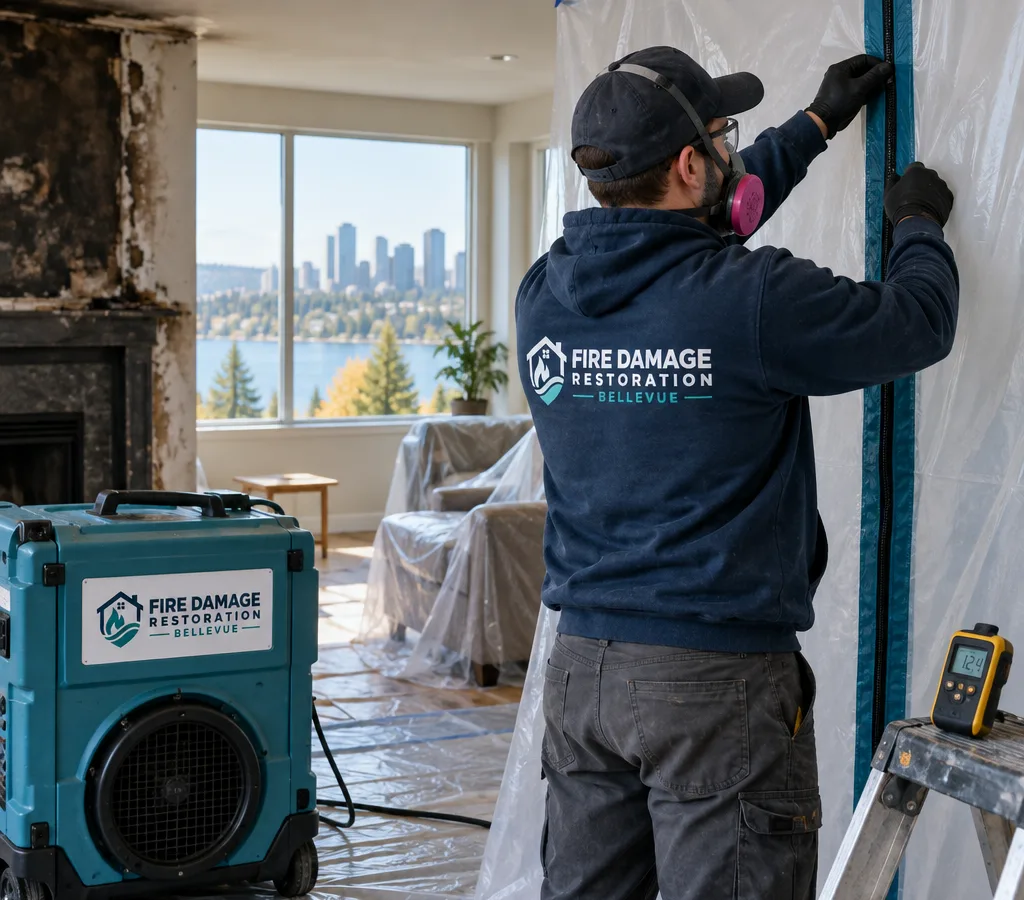
When you disturb moldy materials, spores can spread into adjacent rooms and HVAC pathways. A proper setup keeps the mess and the risk confined to the work zone.
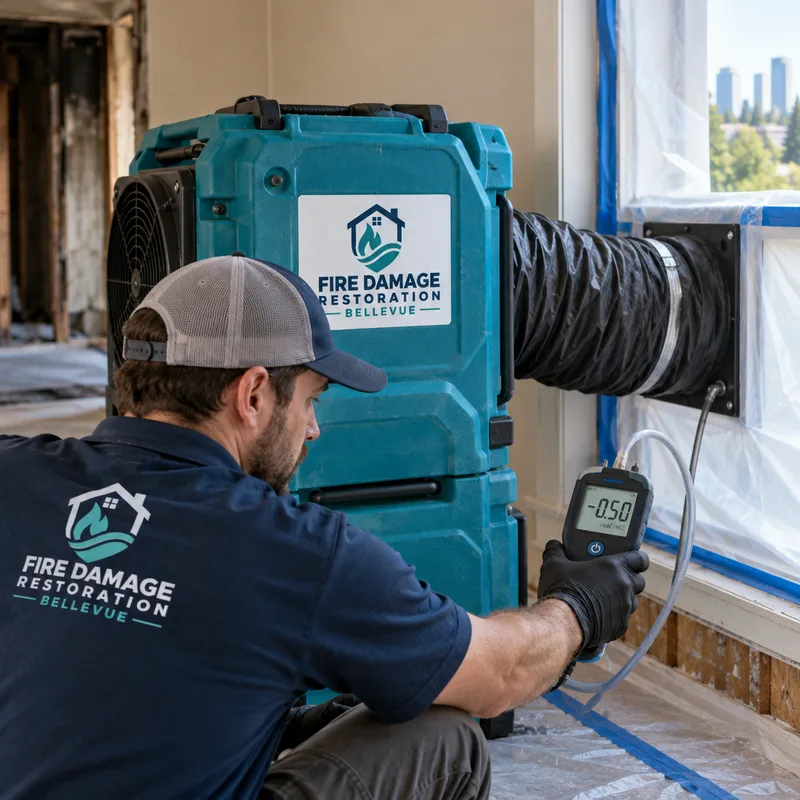
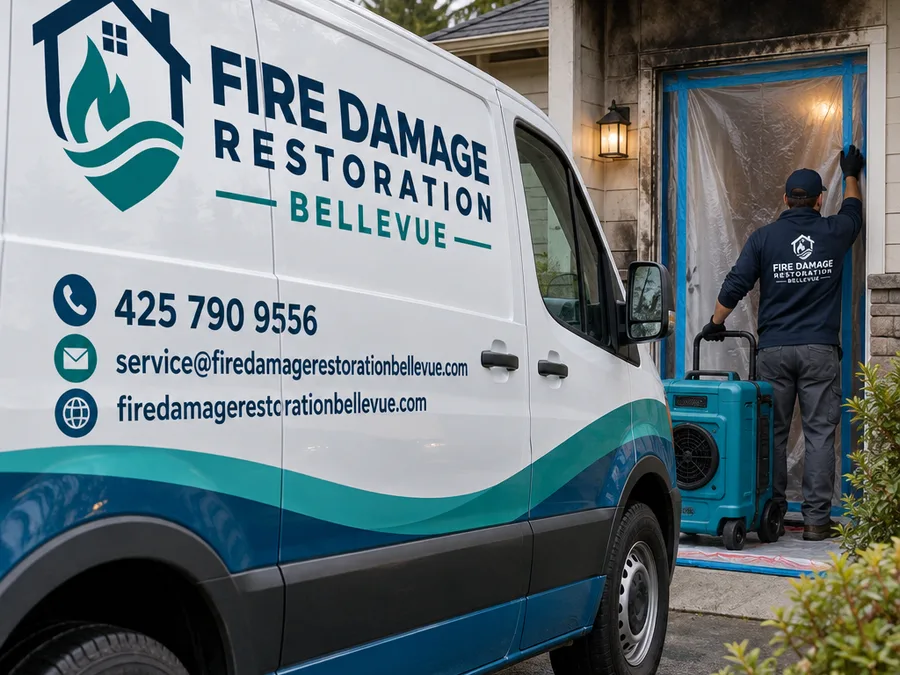
Typical controls include critical barriers—poly sheeting and sealed registers—negative air pressure with HEPA-filtered air scrubbers, and safe entry and exit procedures for workers and materials. We also use HEPA vacuuming and damp wiping where appropriate to keep dust down.
This matters in common Bellevue housing layouts where air can move quickly between floors and open stairwells. In condos and multi-tenant buildings, containment also helps protect neighboring units while work is underway.
If you have had water intrusion recently, acting early can reduce how much material needs to be removed. For active leaks or soaked materials, immediate water damage restoration is often the first step before remediation can be completed.
Controlled from source to repair
What you get with our mold remediation approach
Request Emergency ServiceSource-focused scope
We look for the moisture driver first, because cleanup without moisture control leads to repeat growth.
Clear containment plan
Work zones are isolated with barriers and HEPA filtration to limit cross-contamination during removal and cleaning.
Material-specific methods
Porous materials may require removal; many non-porous and semi-porous surfaces can be cleaned and treated based on condition.
Drying and monitoring
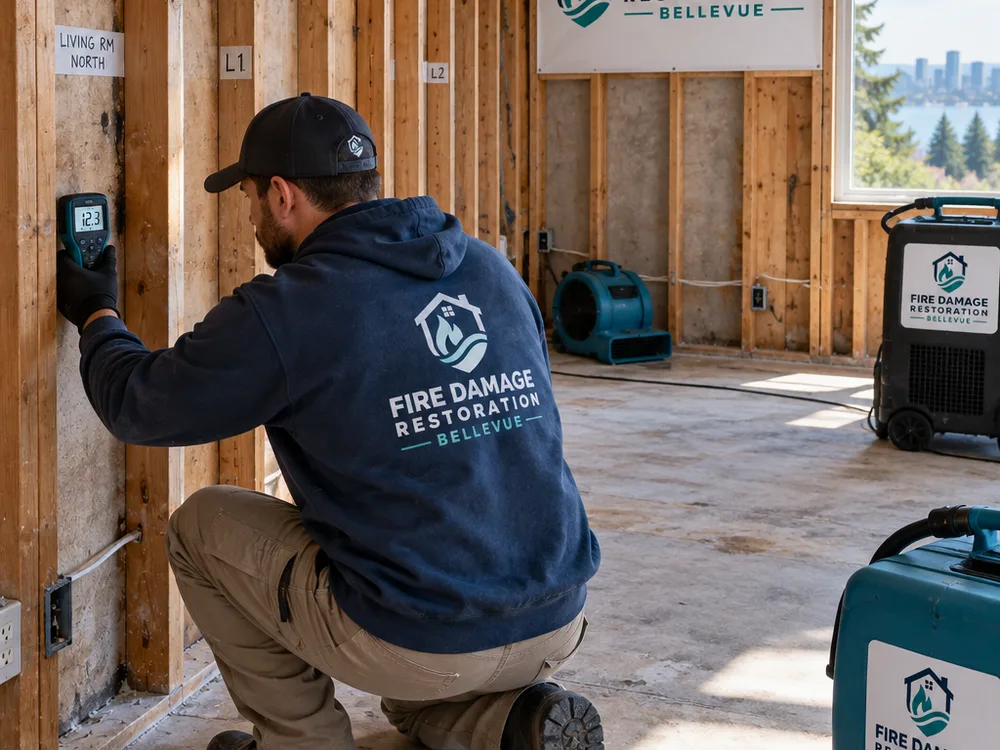
Moisture readings guide drying, not guesswork. We document readings so you know when materials are back to a stable range.
Restoration coordination
After remediation, we can coordinate repairs so walls, flooring, and trim are put back correctly and safely.
From inspection to recovery
Our process for mold remediation in Bellevue
-
01
Inspection and scope
We assess visible growth, odor areas, and likely hidden pathways—behind baseboards, under flooring edges, and around plumbing penetrations. We identify moisture sources and outline what needs cleaning versus removal.
-
02
Containment and air control
We isolate the work area using barriers and set HEPA air filtration to maintain negative pressure when conditions call for it. Registers and openings are sealed to reduce spread.
-
03
Selective demolition when required
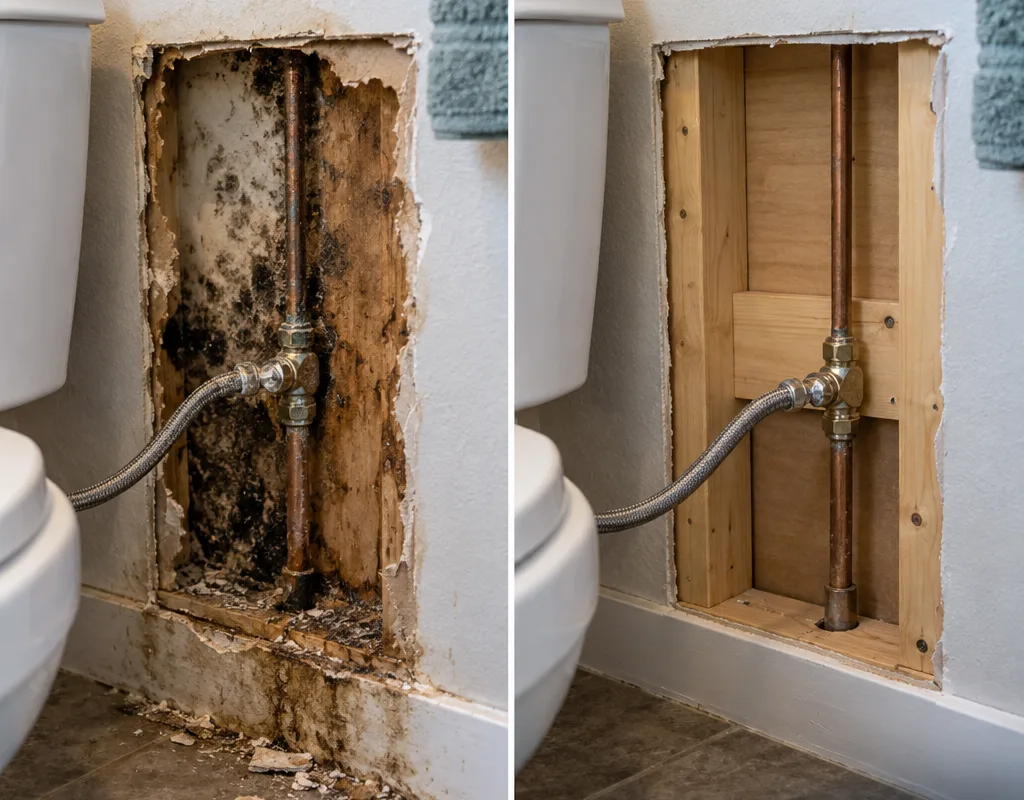
If drywall, insulation, carpet pad, or other porous materials are contaminated or cannot be dried and cleaned reliably, we remove them in a controlled way and bag out debris to keep spores contained.
-
04
Cleaning and antimicrobial application
We HEPA vacuum, wipe, and detail-clean remaining structural surfaces. When appropriate, we apply an antimicrobial treatment as part of the remediation plan; selection depends on the surface and conditions.
-
05
Drying, verification, and next steps
We dry impacted areas and confirm progress with moisture measurements. Then we explain what was done, what to watch for, and how restoration can proceed.
Planning the scope
How Much Does Mold Remediation Cost in Bellevue?
Mold remediation in Bellevue typically ranges from about $1,500 to $6,500 for many residential projects, depending on how much material is affected and how much containment is required. A small, accessible area—like limited surface growth under a sink—may be closer to $800 to $2,000, while multi-room or hidden wall-cavity contamination can run $6,500 to $15,000+.
Final pricing changes with the size of the affected area, whether drywall or insulation removal is needed, how wet the structure is, HVAC involvement, and access constraints such as crawlspaces, tight closets, and occupied rooms. The exact cost is confirmed after an on-site inspection and written scope.
Homeowner perspective
“We had a musty smell that kept coming back. They found damp insulation behind the drywall, set up containment, removed what needed to come out, and documented moisture readings as it dried. The space stopped smelling and we understood exactly what was repaired.”
“The part I appreciated most was how controlled the work was. Plastic barriers, air scrubbers, and everything was bagged out cleanly. They explained what was safe to keep and what had to be removed.”
Practical answers
Mold remediation Bellevue WA: common questions
How long does mold remediation take for a typical Bellevue home?
Many mold remediation projects take 1 to 3 days of active work, then additional time if drying or rebuild is needed. Small, open areas can be completed faster, while hidden moisture behind drywall or under flooring can extend the timeline because materials must dry to an acceptable moisture level before repairs.
Do you need to leave the house during mold remediation?
Often you can stay in the home if the affected area can be fully contained and there is a safe path for workers and debris removal. If remediation involves a bedroom, a main living area, or if HVAC pathways are involved, temporary relocation from the immediate area may be recommended for comfort and safety during active demolition and cleaning.
Will you remove drywall and insulation, or can you clean it?
Porous materials like drywall and insulation are commonly removed when contamination is present, because they are difficult to clean thoroughly and can hold moisture. Non-porous surfaces—metal, tile, and some finished surfaces—can often be cleaned using HEPA vacuuming and damp wiping methods, depending on condition and extent.
Can you remediate mold in a crawlspace or attic?
Yes, crawlspaces and attics are common problem areas because they can trap humidity and hide leaks. Remediation usually includes controlled access, HEPA cleaning, and moisture control steps; in some cases it also requires removal of contaminated insulation or debris to stop odors and prevent continued growth.
Do you provide documentation for insurance or property records?
Yes, we can provide a written scope and job notes that describe the containment measures, affected materials, and the remediation steps performed. For claims tied to a sudden loss event, documentation is often used alongside drying records and photos to support the work performed.
What is the difference between mold removal and mold remediation?
Mold removal usually refers to cleaning visible growth, while remediation is the broader process of containment, cleaning or removing impacted materials, and addressing the moisture conditions that allowed growth. Remediation is the approach used when you want the problem controlled and prevented from returning due to the same moisture source.
Get a clear remediation plan before the damage spreads
Tell us what you are seeing and where the moisture may be coming from. We will walk the space, explain containment and removal options, and provide a written scope with practical next steps for cleanup and restoration.